New Student Orientation

New Student Orientation

NSO
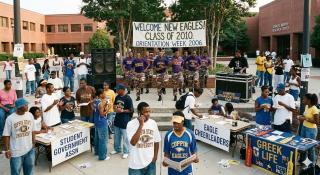
Image of lively student organization Ori Week 2006.png

Your Coppin journey starts here. Orientation is where you meet your community, build your schedule, and step into college with confidence.

Deposited Students

Summer Orientation will take place July 13–17, 2026. These academic-specific sessions are strongly encouraged and designed to help you start your Coppin journey with confidence. Students who attend orientation are more likely to stay on track, connect with support services, and succeed in their first year.

Register for your session:

Before Orientation, How to Prepare

To make the most of your Orientation experience, complete the following steps in advance:

  • Attend a next steps webinar and Admitted Student Day
  • Complete placement testing, if required
  • Participate in your virtual advising session
  • Set up your EagleLinks account to access financial aid and your student bill

After Orientation, Need Additional Support?

If you are unable to attend your scheduled Orientation session or need in-person assistance, Coppin will offer additional support opportunities:

These sessions ensure you receive the guidance and support you need to begin the semester successfully.

Summer Orientation will take place July 13–17, 2026. These academic-specific sessions are strongly encouraged and designed to help you transition smoothly, connect with campus resources, and get ready to start strong.

Register for your session:

Before Orientation, How to Prepare

To make the most of your Orientation experience, complete the following steps in advance:

  • Submit any Final or Official College Transcripts 
  • Review your transfer credit evaluation
  • Set up and check your EagleLINKS account and review your posted credits, financial aid, and student bill.
  • Schedule your advising appointment. This step is necessary to register for classes.

After Orientation, Need Additional Support?

If you are unable to attend Orientation or need additional in-person assistance, Coppin will offer New Student Check-In opportunities:

These sessions are designed to ensure you receive the advising, support, and resources needed to successfully begin your Coppin experience.

International students, on condition you have been granted admissions you must satisfy requirements for issuance of an I-20 with the Office of Admissions to prepare for entry to school. Questions? Contact AMonier@coppin.edu.

Once you obtain your F-1 Visa, upon U.S. arrival within the assigned window of your semester start date, you must contact our International Student Services Program (ISSP) before you may proceed to register for classes. The ISSP is here to help you transition to the Coppin family. Email CTyree@coppin.edu to confirm requirements, status and next steps.

Orientation Information

Before your Orientation session, take a few quick steps to stay on track:

  • Attend a Next Steps webinar and Admitted Student Day
  • Complete placement testing, if required
  • Join your virtual advising session to select your classes
  • Activate your EagleLINKS account to check your financial aid and student bill

If this applies to you:

  • Review your transfer credits once they’re posted
  • Check your financial aid award
  • Apply for housing
  • Submit your final transcript (high school or college) with your graduation date
  • Upload any required in-state residency documents

Getting these done early makes Orientation easier and helps you start the semester stress-free.

Plan to arrive between 7:30 and 8:00 AM for check-in at the PEC lobby, with programming beginning at 8:00 AM and continuing through the afternoon. Throughout the day, you’ll participate in welcome sessions, academic and student engagement activities, and have time to complete important clearance steps, connect with peers, and enjoy lunch on the lawn.

Register for your college-specific session:

If needed, attend New Student Check-In:

New Student Check-In which is a shorter, focused program designed to help you take care of any last-minute items before classes begin. During this time, you can get support with course selection, financial aid, billing or payment extensions, books, your ID card, and parking, so you can start the semester prepared and on track.

New students have access to optional online orientation modules that can be completed at any time as a helpful resource. To access the orientation platform, you must first activate your EagleLINKS account by setting your password. 

Complete the Online Orientation Modules

As a new student, you probably have a few questions. We’re here to help!

New Student Orientation sessions are not required, but they are strongly encouraged. These sessions give you the chance to connect with your academic department, meet faculty and advisors, and better understand expectations within your major.

We understand that some students, especially those traveling from out of state, may not be able to attend. If you are unable to join, you will still have opportunities to receive support through advising and New Student Check-In before the semester begins.

No, you do not stay on campus during your NSO Orientation date. The schedule is 8:00 AM to 12:00PM, with lunch on the lawn from 12:00 PM until. 

We ask that no more than two family members or guests attend with each student. We know that starting college is often a family event. Orientation is a space for family to share in the student experience, ask questions, and build a lasting connection to Coppin State University. The Parent Association and family weekend are great ways to keep the connections going!

We discourage small children from attending. Orientation is for college students and their adult loved ones.

Students should review their bill in EagleLINKS starting in July and make a payment or secure a payment extension before the semester begins. This may include paying in full, setting up a payment plan, or confirming financial aid is ready to disburse after the first week of classes.

Taking care of your bill early helps you avoid holds, delays, and schedule issues so you can start the semester without interruption.

There is no charge to attend New Student Orientation.  

Yes, you will meet with your advisor and other faculty and staff from your academic College. 

Please plan to arrive between 7:30AM and 8:00AM.

There are no parking fees during New Student Orientation. Look for parking signs for best parking once you arrive on campus.

Yes, you will meet other members of the incoming class. Look forward to connecting with at least 2-3 of your classmates.

Our menu for New Student Orientation will include several options. Please note any special dietary need on your registration form. 

If you’re unable to attend, you can still get support by attending Commuter or Residential New Student Check-In, where staff will help with course registration, financial aid, and other key steps. A confirmed housing assignment is required for residential check-in.

Be sure to also join webinars, Admitted Student Day, and your virtual advising session to select your classes and stay on track.

Treble Clef on sheet music

Coppin State University Alma Mater - Hail to Thee Coppin

                                                     Back when the yard was a vibe…and still is ✨
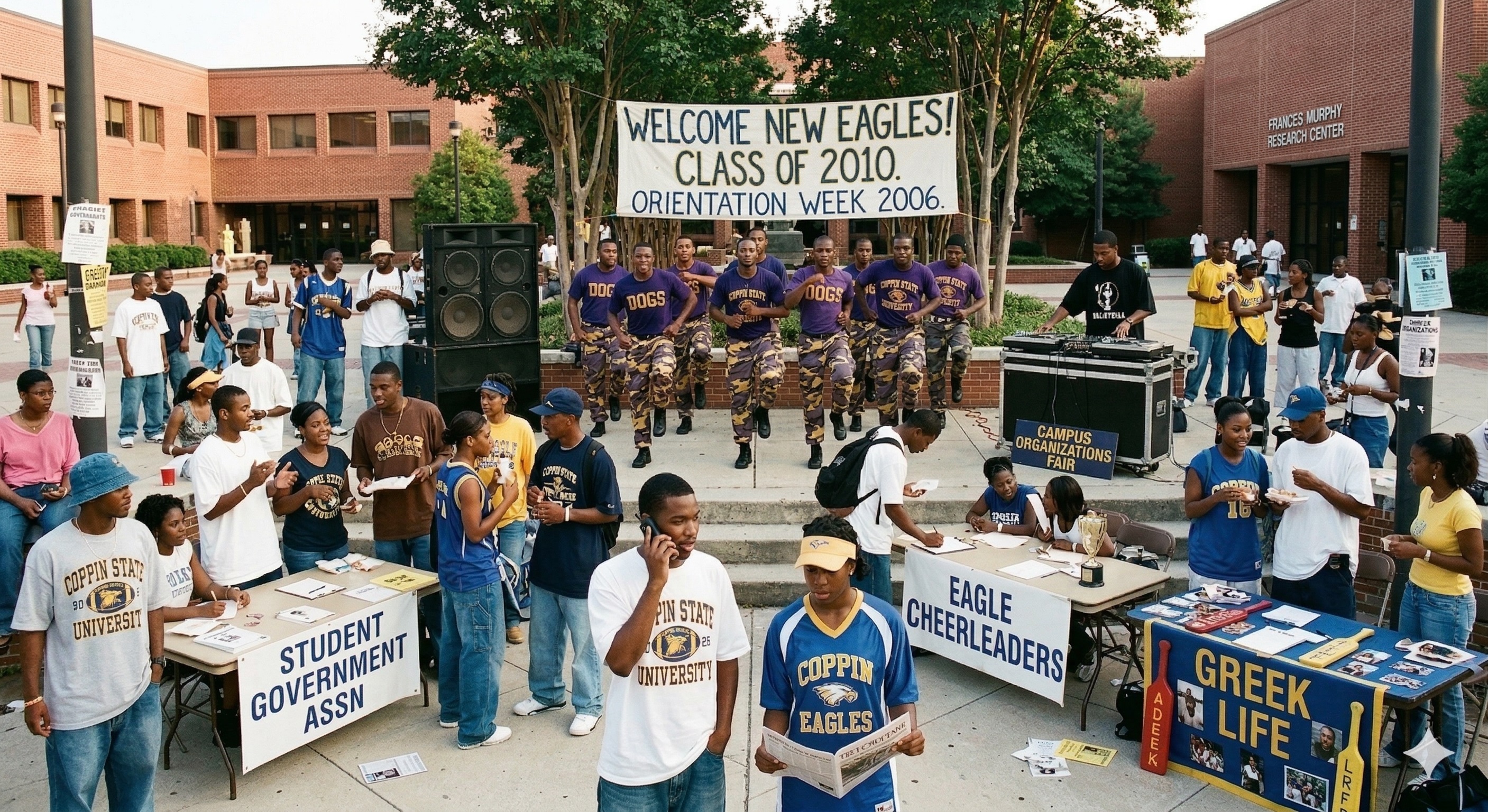
Image of lively student organization Ori Week 2006.png

From 2006 to 2026. From the Class of 2010 to 2030. The Coppin legacy continues 💙 💛 📣 #Coppin126

 

Returning to Coppin State University

Returning Undergraduate Students

Records and Registration

Mon-Thu: 8:00 am - 5:00 pm
Fri: 8:00 am - 3:00 pm
Miles Connor Building, 1st Floor

We get it, life happens. Now let's get you back to your future! 

If you withdrew from your studies and have been away for more than one semester, you must submit an application to be reinstated to the institution. We carefully review each application and supporting documents to determine the action plan based on your prior academic performance, external education, and if applicable, certain circumstances leading to your withdrawal.

Application Deadlines

  • Fall Semester: August 1st
  • Spring Semester: December 1st

Students who were not in good academic standing (less than a 2.0 cumulative GPA) may be encouraged to meet with our Eagle Achievement Center (EAC) leadership to discuss academic barriers and professional goals to devise a personalized plan to degree completion.

Supporting Documents

Include the following documents in your readmission application so that we're able to best determine your student classification and residency:

  • Official transcripts from all schools attended in the interim
  • Tax Forms: If you have not attended in over one year, you must also submit a copy of your Maryland 502 Income Tax Return from the most previous year.
  • Letter of Intent: If you were suspended, dismissed or left Coppin with less than a cumulative 2.0 GPA, submit a statement explaining what led to your academic performance, and a proposed plan of action to achieve and remain in good academic standing.

Submission

Email: Readmitapp@coppin.edu OR Mail to: 2500 W. North Avenue, ATTN: Records & Registration, Baltimore, MD 21216

Returning Service Members

Coppin State University adheres to federal policy outlined in Chapter 3, Volume 2 of The Federal Student Aid Handbook for service members who withdrew and are returning from military orders. Please visit our Veterans and Military Students page for more information.

What are the next steps after being reinstated?

  1. Make an appointment with your academic advisor to remove any registration holds and to discuss your remaining degree requirements
  2. Once your student credentials are restored, log into EagleLINKS and began self-enrolling. Use the Schedule of Classes feature under Apps & Resources to review our course offerings for that semester
  3. Review your class schedule to confirm your registration

    Second Bachelor's or Graduate School

    Student who've graduated from Coppin State University and returning to further their studies will not be considered a "return student". The abbreviated readmission process pertains only to students who are returning to finish their studies. If you're seeking a second Bachelor's degree, you'd follow the standard Admissions process. Graduate school applicants will start with the School of Graduate Studies.

Guaranteed Admission and Reverse Transfer

Guaranteed Admission and Reverse Transfer

Mon-Thu: 8:00 am - 5:00 pm
Fri: 8:00 am - 3:00 pm
Miles Connor Bldg. 1st Floor
(410) 523-7351

Coppin State University (CSU) is a model urban, residential liberal arts university located in the northwest section of the City of Baltimore. Coppin, an HBCU (Historically Black Colleges and Universities), has a culturally rich history as an institution providing quality educational programs and community outreach services. Coppin is committed to providing a quality yet affordable education for students seeking higher education


Save money and time to earn your associate’s and bachelor’s degrees through Coppin State University’s guaranteed admission and reverse transfer process. Coppin has guaranteed admission agreements with some Maryland community colleges that allow students to earn an associate’s degree at an approved community college and then complete a bachelor’s degree at Coppin State University with only 2 additional years of study. Take advantage of our growing list of reverse transfer agreements with local schools, including:

  • Anne Arundel Community College (AACC)
  • Baltimore City Community College (BCCC)
  • College of Southern Maryland (CSM)
  • Garrett College (GC)
  • Colorado Community College System (CCCS)

What is guaranteed admission?

Commonly called a 2+2 agreement, a guaranteed admission agreement is an arrangement between Coppin and a 2-year institution that provides a clear transfer path for successful students. Student who qualify for Coppin admission through a guaranteed admission agreement will be “guaranteed” admission as a junior year student.

What is an articulation agreement?

It’s a CSU-approved agreement with another school that allows a student to apply credits to a specific program at the other school. Applied credits may be used to enter, transfer, or advance standing in a program at the agreeing institution.

You may be eligible for guaranteed admission or reverse transfer, if you meet the criteria. Consider continuing your education at Coppin if you:

  • are in good academic standing at your community college
  • have finished 15 or more credits at an approved community college
  • have finished 60 or more total credits at CSU and an approved community college
  • do not yet have an associate’s or bachelor’s degree
  • have a minimum grade point average (GPA) at CSU and an approved community college

Please note, some agreements may require more students meet additional criteria.

Still have questions after reviewing the eligibility requirements? Reach out to our Transfer Coordinator.

Articulation Agreements


Anne Arundel Community College (AACC)


Baltimore City Community College (BCCC)


Carroll Community College


College of Southern Maryland

The Colorado Community College System (CCCS)

The California Community Colleges 

The Community College of Baltimore County (CCBC)

Garrett College


Harford Community College


Montgomery College

Guaranteed Admission and Reverse Transfer

Guaranteed Admission and Reverse Transfer

Mon-Thu: 8:00 am - 5:00 pm
Fri: 8:00 am - 3:00 pm
Miles Connor Bldg. 1st Floor
(410) 523-7351

Coppin State University (CSU) is a model urban, residential liberal arts university located in the northwest section of the City of Baltimore. Coppin, an HBCU (Historically Black Colleges and Universities), has a culturally rich history as an institution providing quality educational programs and community outreach services. Coppin is committed to providing a quality yet affordable education for students seeking higher education


Save money and time to earn your associate’s and bachelor’s degrees through Coppin State University’s guaranteed admission and reverse transfer process. Coppin has guaranteed admission agreements with some Maryland community colleges that allow students to earn an associate’s degree at an approved community college and then complete a bachelor’s degree at Coppin State University with only 2 additional years of study. Take advantage of our growing list of reverse transfer agreements with local schools, including:

  • Anne Arundel Community College (AACC)
  • Baltimore City Community College (BCCC)
  • College of Southern Maryland (CSM)
  • Garrett College (GC)
  • Colorado Community College System (CCCS)

What is guaranteed admission?

Commonly called a 2+2 agreement, a guaranteed admission agreement is an arrangement between Coppin and a 2-year institution that provides a clear transfer path for successful students. Student who qualify for Coppin admission through a guaranteed admission agreement will be “guaranteed” admission as a junior year student.

What is an articulation agreement?

It’s a CSU-approved agreement with another school that allows a student to apply credits to a specific program at the other school. Applied credits may be used to enter, transfer, or advance standing in a program at the agreeing institution.

You may be eligible for guaranteed admission or reverse transfer, if you meet the criteria. Consider continuing your education at Coppin if you:

  • are in good academic standing at your community college
  • have finished 15 or more credits at an approved community college
  • have finished 60 or more total credits at CSU and an approved community college
  • do not yet have an associate’s or bachelor’s degree
  • have a minimum grade point average (GPA) at CSU and an approved community college

Please note, some agreements may require more students meet additional criteria.

Still have questions after reviewing the eligibility requirements? Reach out to our Transfer Coordinator.

Articulation Agreements


Anne Arundel Community College (AACC)


Baltimore City Community College (BCCC)


Carroll Community College


College of Southern Maryland

The Colorado Community College System (CCCS)

The California Community Colleges 

The Community College of Baltimore County (CCBC)

Garrett College


Harford Community College


Montgomery College

How Residency Decides Tuition

How Residency Decides Your Tuition

Know How Residency Affects Your Tuition

Residency is a policy established by the University System of Maryland (USM) to make sure there is a fair and equitable process to determine a student’s classification and tuition rates across all Maryland state schools. Coppin State University uses residency information to determine if a student is considered a Maryland resident and is therefore eligible for in-state tuition status. The USM site also has available Frequently Asked Questions information regarding residency to assist you as you complete the residency form.

In-State Residency Eligibility

To qualify for in-state status, a student must submit the Residency Form within the Application for Admission and demonstrate all of the following requirements for the 12-month period immediately before the semester or term a student is seeking in-state tuition. The USM Residency Policy states a student must:

  • Have continuously kept their primary residence in Maryland
  • Have kept all personal property in Maryland, including but not limited to furniture, personal belongings, and pets
  • Have paid Maryland income tax on all taxable income and filed a Maryland Resident Tax Return
  • Have registered all owned or leased vehicles in Maryland for at least 12 consecutive months. Check the official Residency Policy for other accepted conditions for motor vehicles
  • Have kept a valid Maryland driver’s license for at least 12 consecutive months. Check the official Residency Policy for other conditions that satisfy this requirement
  • Be currently registered to vote in Maryland
  • Receive no public assistance from any state, city, county, or municipality outside the State of Maryland
  • Have a legal federal and state right to live in Maryland, permanently and without interruption

Initial Residency Determination

The initial Residency determination is made in accordance with the residency policy. All students must complete the Residency Form as a part of the Application for Admissions. The deadline to submit the Residency Application is the first day of classes for the semester you choose to enroll.

Out-of-State Residency Classification

You must be a resident of Maryland and meet all the USM criteria to qualify for in-state tuition. You qualify for out-of-state tuition if you are: 

  • Attending school or living outside Maryland when you apply or are admitted to Coppin (or another USM school)
  • Financially dependent on a person who is not a Maryland resident

How to Change Residency Status

You may petition to change your residency status by submitting a completed Residency Petition Form and any supporting documentation to the Office of Records and Registration. We cannot accept faxed or emailed Residency Petition forms. The form includes information on where to send a hard copy when complete.

  • Attending school or living outside Maryland when you apply or are admitted to Coppin (or another USM school)
  • Financially dependent on a person who is not a Maryland resident

DACA & Maryland Dream Act

DACA: Deferred Action for Childhood Arrivals

The Deferred Action for Childhood Arrivals (DACA) programs protects youth who came to the United States when they were children from deportation. DACA students can temporarily qualify for in-state tuition if they submit the approval notification of their Deferred Action status (I-797, notice of action) AND the Maryland Residency Form to the Office of Admissions by the first day of classes of their intended entry term. Deferred Action status must be held for 12 consecutive months prior to the start of the term to be eligible for in-state tuition rates. For more information, please email admissions@coppin.edu.

The Maryland Dream Act: University System of Maryland Nonresident Tuition Exemption for Eligible Maryland High School Graduates

The Dream Act qualifies any student, other than a non-immigrant alien, within the meaning of 8 U.S.C.- 1101(A)(15), who meets all of the requirements listed on the form, for in-state tuition at all public colleges and universities in Maryland. To be eligible, the student must submit the USM Tuition Exemption Request form and provide the required supporting documentation. The required supporting documents are listed on the form.


NOTE: Applicants who hold Deferred Action for Childhood Arrival (DACA) status should not complete the University System of Maryland Tuition Exemption Request form.

Advanced Placement (AP) and Prior Learning Credit

Advanced Placement (AP) and Prior Learning Credit

Records and Registration

Mon-Thu: 8:00 am - 5:00 pm
Fri: 8:00 - 3:00 pm
Miles Connor Building, 1st Floor

We know learning happens in and outside of the classroom. At Coppin, we recognize how important it is to provide opportunities for students to get course credit for your experiences, skills, and lessons learned.

Pathways to College Credit: 

  • Advanced Placement (AP) Tests
  • International Baccalaureate (IB)
  • College Level Examination Program (CLEP)
  • DANTES Subject Standardized Tests (DSST)
  • Military experience and coursework
  • Course-by-course evaluation
  • Challenge exams
  • Individual portfolio assessment

Want to learn more? View the full Credit for Prior Learning policy

Prior Learning Policy 

Ready to put your past toward your future?

Apply Now
 

Two high school students studying

What to know about AP tests

  • Take your AP tests in May of your high school senior year
  • Schedule your AP test through your high school counselor or the College Entrance Examination Board
  • CSU receives your AP test scores in mid-July

Office of Admissions

Are you an incoming Freshman or new student who has questions about AP or CLEP tests?

marcus edwards
Senior Admissions Counselor of First-Time, First-Year Admissions

staff

Can Help With
Recruitment within Maryland from Montgomery County and Prince Georges County
Recruitment outside of Maryland from Washington, DC
Recruitment outside of Maryland from Virginia, West Virginia, Vermont, New Hampshire, Indiana, Illinois, California, Utah, Arizona, Colorado, Alaska, & Hawaii
janel harris
Associate Director of First-Time, First-Year Admissions

staff

Can Help With
Undergraduate Admissions- First-time Students
Campus Tours

Office of Records and Registration

Office of Records and Registration

2

Welcome to Coppin State University’s Office of Records and Registration or Office of the Registrar. We are the official keepers of academic records for the entire University—that means we keep and maintain all student and alumni academic records as well as all university policies and procedures.

Our Services

Our office serves both prospective and current students, alumni, faculty and staff all throughout their academic and career journey at Coppin. Below is a list of our main services and functions: 

  • Official transcripts
  • Degree and education verification 
  • Graduation clearance and academic record audits
  • Degree and diploma conferment
  • Undergraduate reinstatement applications
  • Inter-institutional and collaborative enrollment initiatives
  • Course enrollment and withdrawals
  • Classroom Schedule Management
  • Challenge exams
  • Grade changes
  • Academic clemency
  • Certifying VA education benefits for military connected students
  • Student Academic Progress (SAP) correspondence
  • General registration assistance

Order your official transcripts today!

Academic Calendar

Stay on top of dates and deadlines at Coppin.
Academic Calendar

Forms, Policies and Procedures

Browse and search all forms or select a category.

Browse & search all forms

Staff

Registrar

staff

Technology Manager

staff

Program Management Specialist

staff

Assistant Registrar

staff

Administrative Coordinator

staff

Transfer Coordinator

staff

Office of Financial Aid

Office of Financial Aid

Coppin students and Eagle

Important Notice! Review Your Financial Aid Award for Fall 2026/Spring 2027

Log in to EagleLinks to review your financial aid package and complete any outstanding requirements.
Access EagleLinks Now

Welcome to the Office of Financial Aid

At Coppin State University, we understand the importance of making higher education affordable and accessible. Our dedicated team is here to guide you through the financial aid process, helping you explore options to fund your education and achieve your goals.


Application Deadlines

Staying aware of important financial aid deadlines is crucial to maximizing your funding opportunities:

  • FAFSA Availability: The Free Application for Federal Student Aid (FAFSA) for the 2027–2028 academic year will be available starting October 1, 2026.

  • FAFSA Priority Deadline: Submit your FAFSA by March 1, 2027, to ensure consideration for the maximum amount of institutional and federal financial aid.

  • Maryland State Financial Aid Deadline: The hard deadline for state financial aid applications (including consideration for MHEC grants) remains March 1, 2027.

  • Scholarship Application Deadlines: Deadlines vary by program; please refer to individual scholarship listings below for specific dates.


Note: Submit your FAFSA early using Coppin State University’s school code: 002068.


Financial Aid Opportunities

Explore the financial aid options available to Coppin State University students:

  • Scholarships

 Explore Scholarship

  • Grants

Explore Grants  

  • Loans

Explore Loans 


Important Updates for 2025


FAFSA Simplification Act

  • The FAFSA form has been simplified for a faster, user-friendly application process.
  • Expanded Pell Grant eligibility based on adjusted income guidelines.
     

State-Specific Programs

  • Guaranteed Access Grant: For low-income Maryland residents.
  • Delegate and Senatorial Scholarships: Contact your Maryland state representatives to apply

Estimate Your Costs

Coppin State University’s Net Price Calculator helps you estimate your cost of attendance and potential financial aid based on your individual circumstances.

Your estimate may include tuition and required fees, books and supplies, room and meal plans, and other educational expenses.

Estimate Your Cost with the Net Price Calculator 


Frequently Asked Questions

Complete the FAFSA at fafsa.gov using Coppin’s school code: 002068.

  • Tax returns (student and/or parent, if dependent)
  • W-2 forms or income records
  • Documentation of untaxed income

Log in to your EagleLinks account to view your application and award status.

How to Keep Your Student Loans in Good Standing

How to Keep Your Student Loans in Good Standing

You’re not alone if you need to borrow money to pay for your education. Many students at Coppin and other universities decide to apply for federal financial aid, scholarships, and other funding opportunities.

The Office of Financial Aid encourages all students to research other funding sources, including federal, state, local, private, and public grants, scholarships, student employment, as well as employer tuition assistance. We keep a database of scholarships and other funding, but it’s just as important for you to do your own research.

What all student borrowers should know

Working with student borrowers, our office has a lot of experience understanding what every student borrower needs to know. The biggest point to remember is that you must repay federal student loans. When you don’t repay a loan in repayment, it can put your loan in default.

The federal government does any and everything to get federal monies loaned to borrowers, and are well within their rights to seize your tax refund, garnish wages, and place liens on your property—all of which can damage your credit. Read on to learn how you can make smart decisions about your federal financial aid.

Borrowing and managing student and parent loans

Students and families who take out federal school loans are borrowing money to pay for school. Remember, any money you borrow must be repaid—even if you do not finish school. It is also important to remember that when you borrow money, you are agreeing to a contract for how you get the money, what it can be used for, how you repay it, and what your options are if you cannot or do not pay your loans back.

School can get expensive, so it may be tempting to borrow more than you need. We get it—but strongly encourage you to only accept loans based on actual need.

When your loans enter repayment, you will have to pay back everything you borrowed plus interest. Borrowing more than you need may lead to higher monthly payments for a longer time. Remember, you must repay your loans even if you do not finish your program and/or degree.

View and manage your loans through the National Student Loan Data System (NSLDS). Be ready with your FSA User ID because you can use it to login to NSLDS too. You can also contact the Federal Student Aid Information Center (FSAIC) via live chat, phone, or email.

When you have multiple loans, each loan may be with a different loan service provider. A loan servicer is a company the federal government assigns to handle the billing and repayment of your loans. Some well-known providers are FedLoan Servicing, Mohela, Nelnet, and ECSI, along with several others. Be sure you know who your providers are and how to contact them. The NSLDS is a good place to start.

Loan consolidation means to combine multiple loans into one loan so you have one bill and repayment plan. Borrowers must have at least one Direct Loan or Federal Family Education Loan (FFEL) to qualify for consolidation through a Direct Consolidation Loan. You may also qualify if you have Federal Stafford Subsidized, Unsubsidized, Perkins loans, or loans from another school attended in addition to Coppin.

Loans must be in grace, repayment, deferment, or default status to qualify for consolidation. They cannot be in in-school status. Consider learning more about loan consolidation and if it’s right for you.

Repaying student and parent loans

Repayment is the period of time where you must pay your school loans back. There are often several different options for repayment. Be sure to work with your loan providers for a repayment option that fits your employment status and other needs.

First, your loan service provider contacts you with the date your loan repayment starts and how much you owe. They usually contact you when one of the following events happens:

  • Graduation
  • Withdrawal from school
  • Drop below half-time enrollment

These events start the 6-month grace period before you must start repaying your loans. During the grace period, your subsidized loans don’t earn interest. Unsubsidized loans do earn interest, which is then added to your loan balance when it enters repayment. Repayment begins the day after your grace period ends, and your first payment is due within 60 days. Talk with your loan service provider about extending your grace period, if needed.

Each loan only has one grace period. You may be eligible for loan deferment if you re-enroll in school, but you will immediately return to repayment after you leave school. There are also options to pay your loans while you are enrolled in school. Contact your loan service provider to learn more.

Loan service providers commonly offer different types of repayment plans. Let’s look at the most common ones.

Standard repayment

With this plan, you’ll pay a fixed amount each month until your loans are paid in full. These plans often have a 10-year limit, so your monthly payments may be higher than other repayment plans, but you may pay less interest overall.

Graduated repayment

With this plan, you’ll start with a low payment that gradually increases every two years. These plans last for 10 years and can be a good choice if you expect steady salary increases.

This plan still earns interest that is part of your monthly payment. However, even with interest and graduated payments, you will not have any single payment be 3x more than any other payment.

Extended repayment

With this plan, you’ll pay an annual fixed amount or graduated amount over 25 years. This plan allows you to make smaller monthly payments over a longer period. Remember, even though your monthly payments may be smaller, you will pay more than the total amount of your loan because it will earn interest during the entire repayment period.

To be eligible for an extended repayment plan, borrowers must have certain types of loans:

  • $30,000 or more in outstanding Federal Family Education Loan (FFEL) loans and/or
  • $30,000 or more in outstanding Direct Loans

Getting help for loan default

Everyone can fall on hard times, so it’s important to know what can happen if you are unable to pay your loans as agreed. Your loan service provider may be able to help, so do not wait to contact them if you are struggling to repay your bills.

When you accept your loans and sign your Master Promissory Note (MPN), you also agree to conditions for repaying your loan(s) on time. Failure to repay your loan(s) can result in loan default, and other consequences.

There are options to available to help you prevent default:

Deferment is a period of time that postpones your student loans payments. During deferment for subsidized loans, interest doesn’t accrue. Deferment is usually available for students enrolled in courses at least half-time.

Forbearance is a time period when your monthly loan payments are temporarily suspended or reduced due to financial hardships. Common hardships include medical expenses, financial difficulties, or loss of employment.

Repayment options are available. Changing your repayment plan can be helpful if your life circumstances change. There are no penalties for changing to a different repayment plan.

When you sign your Master Promissory Note (MPN) it becomes a binding legal document. This means, when you break the terms of the MPN, like repaying your loans on time, you are breaking the law. Any of the loan providers, managers or guarantors of your loans can take legal action against you to recover the money you owe.

Serious consequences of loan default include:

  • Negative impact to your credit rating
  • Wage garnishment
  • Ineligibility for additional federal student aid
  • Legal action
  • Federal tax return garnishment

The Federal Student Aid (FSA) Ombudsman is a resource available to help students resolve disputes and problems regarding federal student loans. We also encourage you to reach out to your loan service provider.

Student Loan Default Rate at Coppin State University

Cohort Default Rate

In 2019 the default rate for borrowers at Coppin State University was 7%. A total of 1,005 Coppin State University students entered loan repayment in 2019. After three years, 7% of these students (71 out of 1,005) defaulted on their loans. 

A cohort default rate (CDR) is the percentage of a school’s borrowers who enter repayment on certain Federal Family Education Loan (FFEL) Program or William D. Ford Federal Direct Loan (Direct Loan) Program loans during a particular federal fiscal year (FY), October 1 to September 30, and default or meet other specified conditions prior to the end of the second following fiscal year.

A student is considered to be in default on a student loan if they have not made a payment in more than 270 days. The official student loan default rate for a school is calculated by measuring how many students are in default three years after graduation. Note that the default rate only takes into account federal loans, not private.

Student Rights and Responsibilities

Student Rights and Responsibilities

Mon-Thu: 8:00 am - 5:00 pm
Fri: 8:00 am - 3:00 pm
Miles Connor Admin Bldg. 1st Floor
(410) 951-2551

Understanding your financial aid can feel overwhelming, but we are here to help! Any student who receives financial aid has rights and responsibilities that are important to know. We’re here to empower you to make the best financial decisions for your Coppin education.

As a student recipient of financial aid, you are entitled to know:

  • Details about available financial aid programs
  • Processes to apply for financial aid
  • Criteria used to determine student eligibility and financial need
  • Policies and procedures around refunds and repayments
  • Policies and procedures on Satisfactory Academic Progress (SAP)
  • Rights and responsibilities of Coppin’s academic programs

As a student recipient of financial aid, you are responsible for:

  • Reading your Master Promissory Note (MPN) and disclosure statement to understand the terms and conditions of your Federal Direct Student Loan(s)
  • Submitting accurate information and forms to the Office of Financial Aid (OFA) on time
  • Updating the OFA on changes to your personal information, that may include name, address, marital status, financial situation, etc.
  • Communicating any other funding assistance from outside sources to the OFA—this may include scholarships, private loans, and educational benefits
  • Informing the OFA of any changes in your enrollment status
  • Maintaining Satisfactory Academic Progress (SAP)
  • Re-applying for financial aid by March 1st of each year