
Coppin State University Hosts Inaugural House Music Studies Conference
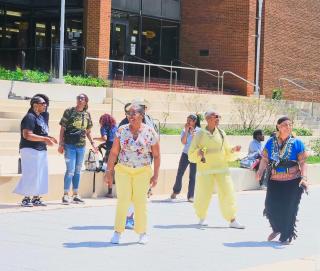
Event highlights Coppin’s role as a hub for culture, scholarship, and community engagement in West Baltimore
BALTIMORE — Coppin State University reaffirmed its role as Baltimore’s Hometown University and a center for culturally relevant scholarship with the launch of its inaugural House Music Studies Conference on Friday, April 17, 2026. Hosted by the History and African American Studies Program, the conference brought together scholars, artists, students, and community leaders to examine the cultural, historical, and social significance of house music through the lens of Baltimore’s legacy.
Rooted in West Baltimore, Coppin has long served as a hub where culture, community, and academic inquiry intersect. The conference reflected that tradition, elevating house music as both a global genre and a local expression of Black creativity, identity, and community-building. Through dialogue and engagement, the event reinforced the university’s mission to connect academic learning with real-world experience and cultural understanding.
The conference emphasized Baltimore’s distinct and often underrecognized role in shaping the house music movement. Participants explored how the city’s club culture, dance traditions, and community spaces have contributed to the evolution of house music as both a global sound and a powerful local tradition.
The program featured a dynamic lineup of speakers, including internationally renowned house music artist Ultra Naté, whose career has helped define the genre worldwide. She shared personal insights into the evolution of house music and its enduring connection to Baltimore, identity, and liberation.
Also featured was Dr. Elgin Klugh, cultural anthropologist and chair of Coppin’s Department of Applied Social and Political Sciences, who provided an academic perspective on urban culture and the preservation of Black expressive traditions. His work, including oral histories of the Baltimore club scene, underscores the importance of documenting and studying cultural movements within academic spaces.
Rounding out the featured speakers was legendary DJ and former Coppin State student Porkchop, who offered a practitioner’s perspective rooted in Baltimore Club music. His reflections highlighted the city’s influence on the sound, style, and energy of house music, as well as its role in fostering intergenerational cultural exchange.
The conference also drew notable figures from the house music community, including Thommy Davis of The Basement Boys, artist and producer Charles Dockins, and film producer and event promoter Domingo “Ming Son” Cañate. International choreographer and Baltimore native Terry “TSU Terry” Wedington led an interactive dance workshop, teaching participants foundational Baltimore Club movements. The event concluded with a House Music dance celebration on the Library Quad.
Attendees extended well beyond Coppin’s campus, with students and guests representing Morgan State University, Johns Hopkins University, Bowie State University, Howard University, Baltimore City Community College, and Coppin Academy High School. The broad participation reflected the wide-reaching influence of house music across disciplines, institutions, and generations.
More than a scholarly gathering, the House Music Studies Conference served as a reflection of Coppin’s identity and mission. By centering Baltimore’s cultural contributions and elevating community voices, the university continues to position itself at the forefront of academic inquiry that is both relevant and impactful. Through initiatives like this, Coppin strengthens its legacy as a place where history, culture, and education come together to prepare students to lead.